For the next few days, we didn’t run a single session. We just watched.
We sat in on the team’s existing training. We listened to live sales calls, one after another. We shadowed managers as they coached their teams. We went through sales reports and quality scores until the patterns started repeating themselves in our sleep.
And one pattern stood out above everything else.
The moment a customer hesitated — even for a second — the sales executive reached for the lowest possible price. Almost on instinct. There was barely any effort to understand what the customer actually needed. Discovery questions were rare. Solutions got recommended before anyone had figured out the problem. Value, as a conversation, had almost disappeared.
Somewhere along the way, the sales process itself had quietly turned into a discounting process.
Here’s where it got interesting. The deeper we looked, the more it became clear this wasn’t a single, tidy problem with a single, tidy fix.
First, the team wasn’t following a structured sales process. Conversations jumped from “hello” to “here’s my best price” in record time, skipping the one stage that actually matters — understanding what the customer came in for.
Second, they lacked real consultative selling skills. The instinct wasn’t to position the right solution; it was to close, fast, by any means necessary. And the fastest means available was almost always the price tag.
*Third — and this was the one that really explained the other two* — a belief had taken root across the team, quietly, over months and years: customers won’t buy unless we offer the lowest price. Nobody had taught them this. Experience had. And it had become more powerful than everything they actually knew about the product.
Put those three together, and you get a team that wasn’t really selling solutions anymore.
They were selling discounts.
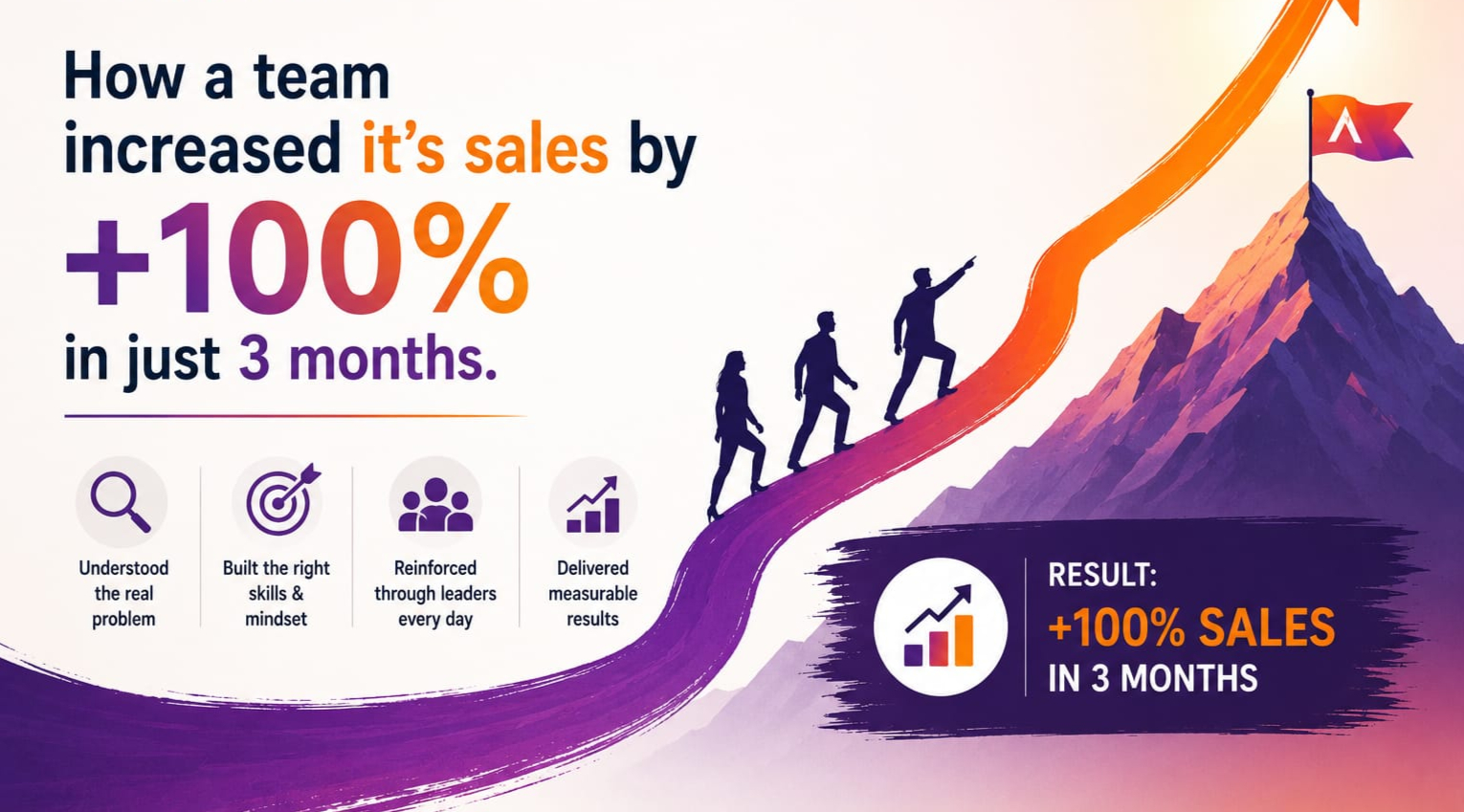
A standard product refresher wasn’t going to touch any of this. So we built something with three deliberate pillars instead of one.
To keep the momentum alive, we introduced something simple: a live performance scoreboard, visible to every team, recognizing both the top-performing team and the top individual.
It wasn’t about pressure. It was about making improvement visible enough that people could see their own progress in real time — and start to trust it.
Slowly, hesitation gave way to confidence. The question in the room changed.
Within three months:
When sales decline, the instinct is almost always the same: more product training.
But sustainable performance rests on three things working together — a clear sales process, the capability to sell consultatively, and the confidence to hold a price without flinching. Miss any one of the three, and the other two won’t be enough to hold up the result.
And maybe the sharpest lesson of all: training changes knowledge. Reinforcement changes behaviour. The two are not the same thing, and mistaking one for the other is how most training investments quietly fail to stick.
we believe business results don’t improve because people sat through a workshop.They improve when capability, mindset, and everyday coaching are all pulling in the same direction.