Sometimes the biggest warning signs in a business don’t show up on a dashboard. They show up in conversation.
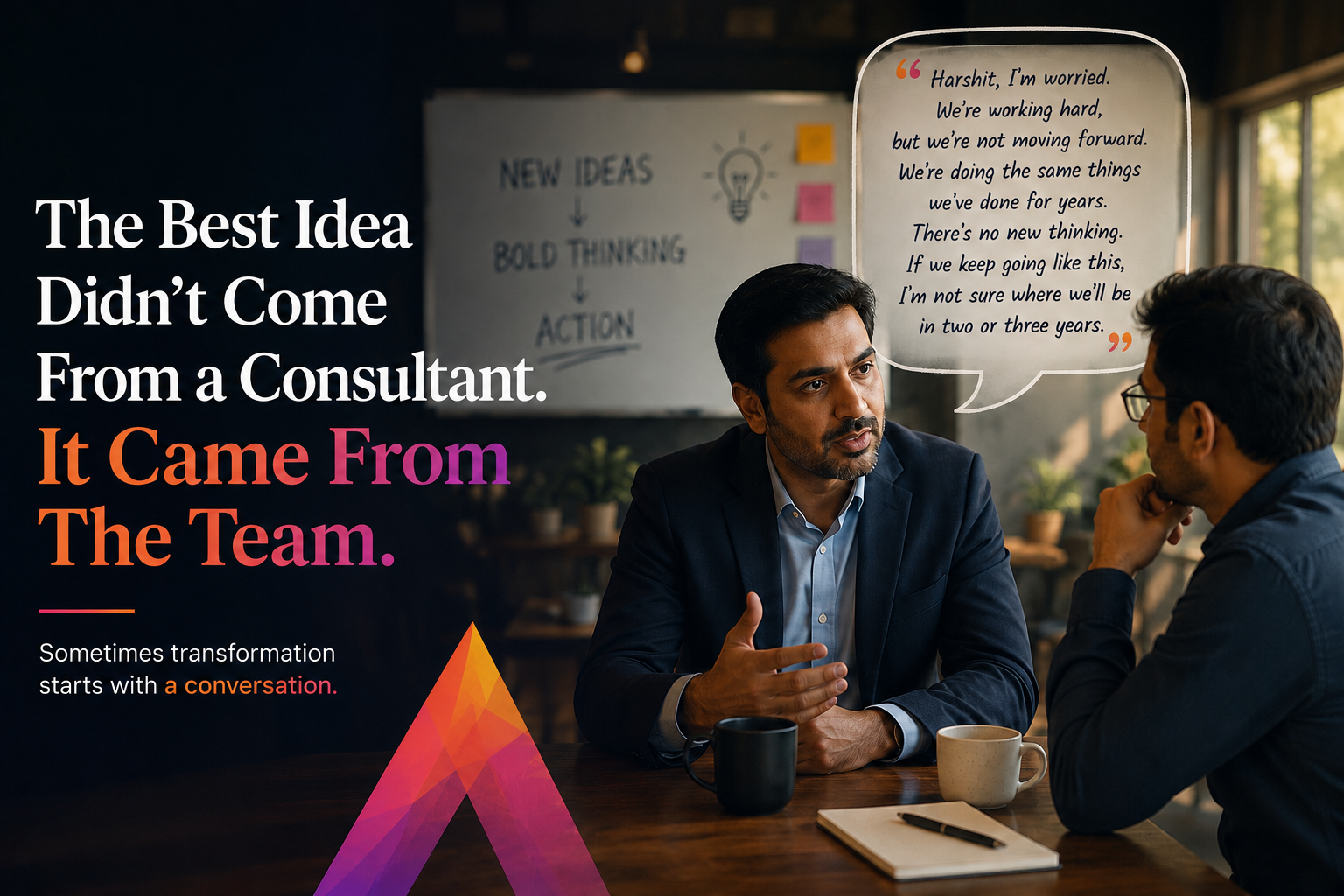
A few weeks after joining the organization, the new Business Head asked if we could grab a coffee. No agenda. No slides. Just one leader thinking out loud.
After a few minutes, he looked at me and said:
“Harshit, I’m worried. We’re working hard, but we’re not moving forward. We’re doing the same things we’ve done for years. There’s no new thinking. If we keep going like this, I’m not sure where we’ll be in two or three years.”
So instead of recommending another training programme, I suggested something else: “What if we simply create space for the team to think? Not about targets. Not about pending emails. About the future of the business.”
The idea was a workshop where leaders could challenge assumptions, debate ideas, surface opportunities, and walk out with clear ownership.
The workshop began quietly. People were cautious — waiting for others to speak first, sticking to familiar ground.
But as the day went on, something shifted. Departments stopped defending their turf. People started listening instead of waiting for their turn to talk. Ideas challenged ideas. Assumptions got questioned. Disagreements turned into real debate. For the first time in a long time, the room felt alive — not because anyone had all the answers, but because everyone realized they could be part of one.
By the end of the day, the team hadn’t just generated ideas. They’d built commitment. Every initiative had an owner. Responsibilities were clear. Priorities were agreed. Governance was in place.
Most importantly, the ideas belonged to the team — not to HR, not to a consultant, not to the Business Head. People fight harder for ideas they helped create, and that’s exactly what happened.
Those conversations turned into action. Several initiatives were implemented, and the business saw movement on both the top line and the bottom line.
But the numbers only tell part of the story. The bigger shift was in the people. Leaders started asking better questions. Teams collaborated more openly. Meetings became conversations instead of status updates. There was a renewed belief that they could shape the future instead of just reacting to it.
HR is often introduced as a support function. But support doesn’t always mean standing behind the business — sometimes it means standing beside leaders when they’re searching for answers. Sometimes it means creating the environment where people feel safe enough to challenge old thinking. Sometimes it means starting the conversation no one else has the time, or the courage, to start.
we believe transformation doesn’t always begin with a new strategy. Sometimes it begins with a simple conversation over a cup of coffee. One honest question. One room full of people willing to listen. And one team that rediscovers what it’s capable of building — together.
Because businesses don’t grow through better ideas alone. They grow when people believe those ideas are worth bringing to life.